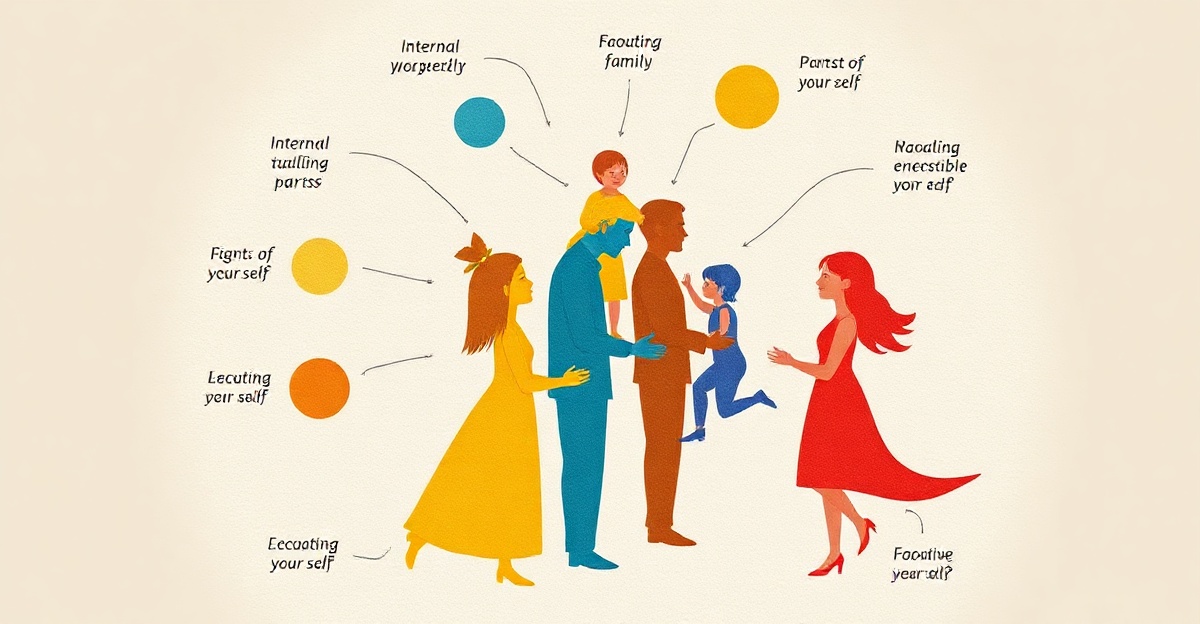
Internal Family Systems (IFS) therapy is based on a revolutionary premise: you're not broken. You're a system of protective parts, each of which developed for a reason and is trying to keep you safe.
Rather than seeing these parts as pathological, IFS sees them as protective. The angry part, the scared part, the controlling part, the people-pleaser—each has a role. Each is trying to help.
The System of Parts
Think about your own inner experience. Sometimes you feel one way, sometimes another. Sometimes there's a part of you that wants to take risks and another that wants to stay safe. A part that wants connection and a part that wants to isolate. A part that's angry and a part that's ashamed.
These aren't flaws. These are parts of your system.
In trauma survivors, these parts often become extreme or rigid because they developed in response to real danger. If your environment was chaotic, you might have developed a protective part that's hypervigilant. If you experienced helplessness, you might have developed a part that's controlling. If you experienced rejection, you might have developed a part that works hard to be perfect.
The Inner Exile
IFS theory identifies one particular kind of part called an "exile"—usually a younger, vulnerable part that holds the painful emotions and memories of trauma.
This exiled part is so painful to experience that other protective parts develop to keep it locked away. The protectors work overtime to keep the exile suppressed.
This is actually adaptive—if the full force of the trauma pain hit you all the time, you couldn't function. The protective system allows you to survive.
But it also keeps you stuck. You can't access the vitality, joy, and authenticity that's often associated with these vulnerable parts.
The Goal of IFS
The goal of IFS isn't to eliminate parts. It's to help all parts work together as a system.
The process typically involves:
Getting to know your parts - What is each part trying to protect? What's it afraid of? What does it need?
Understanding their role - Even seemingly negative parts usually have a protective function. Anger might be protecting you from feeling helpless. Perfectionism might be protecting you from rejection.
Accessing your Self - IFS posits that beneath all the parts is a core "Self" that has qualities like curiosity, compassion, and wisdom. When you access this Self, you can work with your parts from a place of internal leadership rather than internal chaos.
Helping parts cooperate - Rather than parts fighting for control, they can coordinate. The protective part can protect without being so rigid. The vulnerable part can be cared for without running the system.
Unburdening - Sometimes parts are carrying extreme beliefs or emotions. IFS helps them release these burdens, which often transforms their role.
What This Feels Like
Working with IFS, you might notice:
- Increased internal dialogue and understanding ("Oh, that part of me that panics makes sense given my history")
- Less internal conflict (parts aren't fighting as hard)
- More flexibility (you can access different parts' strengths as needed)
- Greater compassion toward yourself (even your most problematic parts are trying to help)
- More feeling of being "in charge" of your own system
The Power of This Approach
What makes IFS revolutionary for trauma is that it doesn't pathologize your internal experience. Your parts aren't sick. They're adaptive responses to real circumstances.
By understanding them, honoring their protective function, and helping them work together, you don't eliminate the parts—you transform your relationship to them.
You become a coordinated system instead of a chaotic one. And that coordination is profoundly healing.