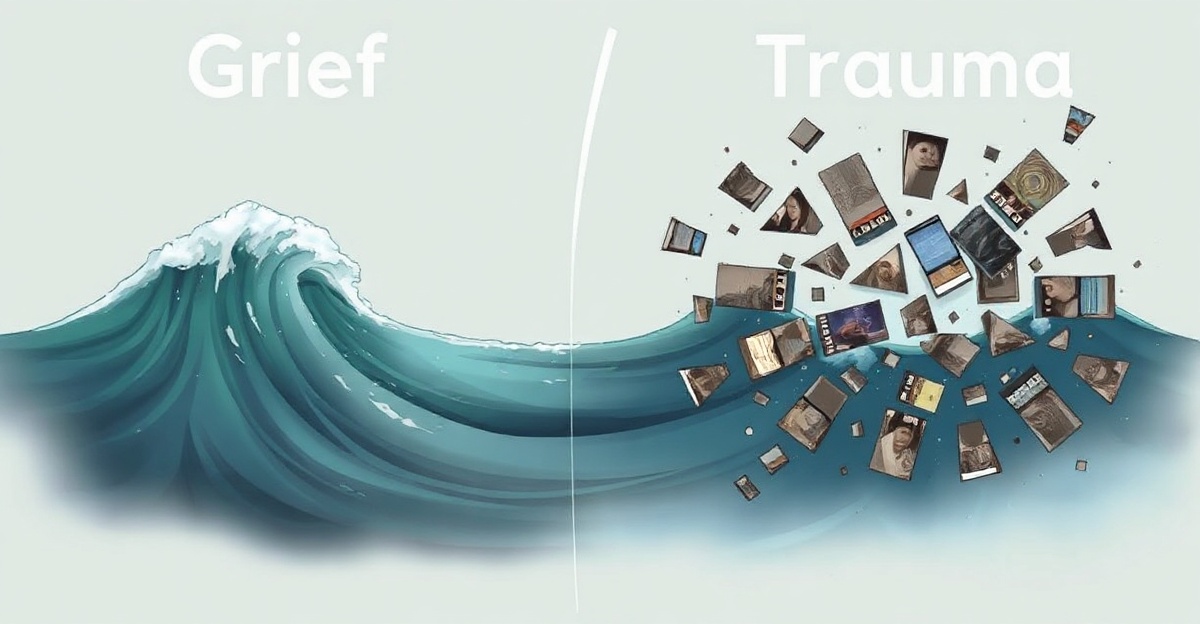
There's an important distinction between trauma and grief—and an important overlap. Many people confuse them, which can lead to seeking the wrong kind of support.
What is Grief?
Grief is the natural, healthy response to loss. Someone dies, a relationship ends, you lose a job, you move away—grief is the process of moving through the loss.
Grief is painful, but it's supposed to be. It's your system's way of integrating the reality of loss and eventually moving forward.
Healthy grief typically:
- Follows a general trajectory (acute pain gradually lessens)
- Involves feeling the emotions without being overwhelmed by dysregulation
- Maintains your ability to function in other areas of life
- Naturally integrates over time
- Allows you to honor what was lost while moving forward
What is Trauma?
Trauma is a shock to your nervous system. It's something sudden, often violent or dangerous, that overwhelms your capacity to process.
Trauma typically:
- Involves a perceived threat to safety
- Activates fight-flight-freeze-fawn responses
- Fragments your memory and sense of self
- Creates dysregulation (not just sadness, but nervous system activation)
- Gets stuck in your system (doesn't naturally resolve)
- Feels perpetually present
The Overlap: Traumatic Grief
Here's where it gets complex: you can experience traumatic grief. This happens when the loss is sudden, violent, or overwhelming in a way that traumatizes your nervous system.
Losing someone to sudden death, suicide, or violence is not just grief—it's traumatic grief. The sudden, shocking nature creates trauma alongside the grief.
Similarly, if you experience loss in a context where you feel helpless or threatened, grief becomes intertwined with trauma.
Why the Distinction Matters
If you're experiencing grief (without trauma), you need:
- Space to feel the loss
- Community and witnesses
- Rituals and meaning-making
- Time
- Connection
If you're experiencing trauma, you also need:
- Nervous system regulation
- Trauma-specific therapy (EMDR, somatic experiencing)
- Safety restoration
- Flashback management
- Potentially medication support
If you're experiencing traumatic grief, you need both types of support working together.
Processing Grief After Trauma
Many trauma survivors have delayed grief. While you're managing trauma symptoms, you don't have the capacity for grieving.
As you heal from trauma and your nervous system stabilizes, grief often emerges. This is actually healthy—it means you now have capacity for this important process.
How to Know What You're Processing
Ask yourself: Is the primary experience sadness that naturally ebbs and flows, along with ability to function? Or is it dysregulation, flashbacks, and feeling perpetually in crisis?
Most people's experience includes both. You're both grieving a loss AND managing trauma. The proportion varies.
Getting Support
A good trauma-informed therapist can help you navigate both. They'll support your grief while also helping regulate your nervous system. They'll recognize when you need to sit with sadness and when you need grounding and regulation.
The key is: grief without trauma is normal and necessary. Trauma makes that grief more complex. But both can be moved through with proper support.
Understanding which you're experiencing helps you get the right help.